
Pepperoni Pizza vs Diavola: The Italian Spicy Salami Pizza, Explained in Thonglor
- Ombra Modern Tavern
- Nov 18
- 7 min read
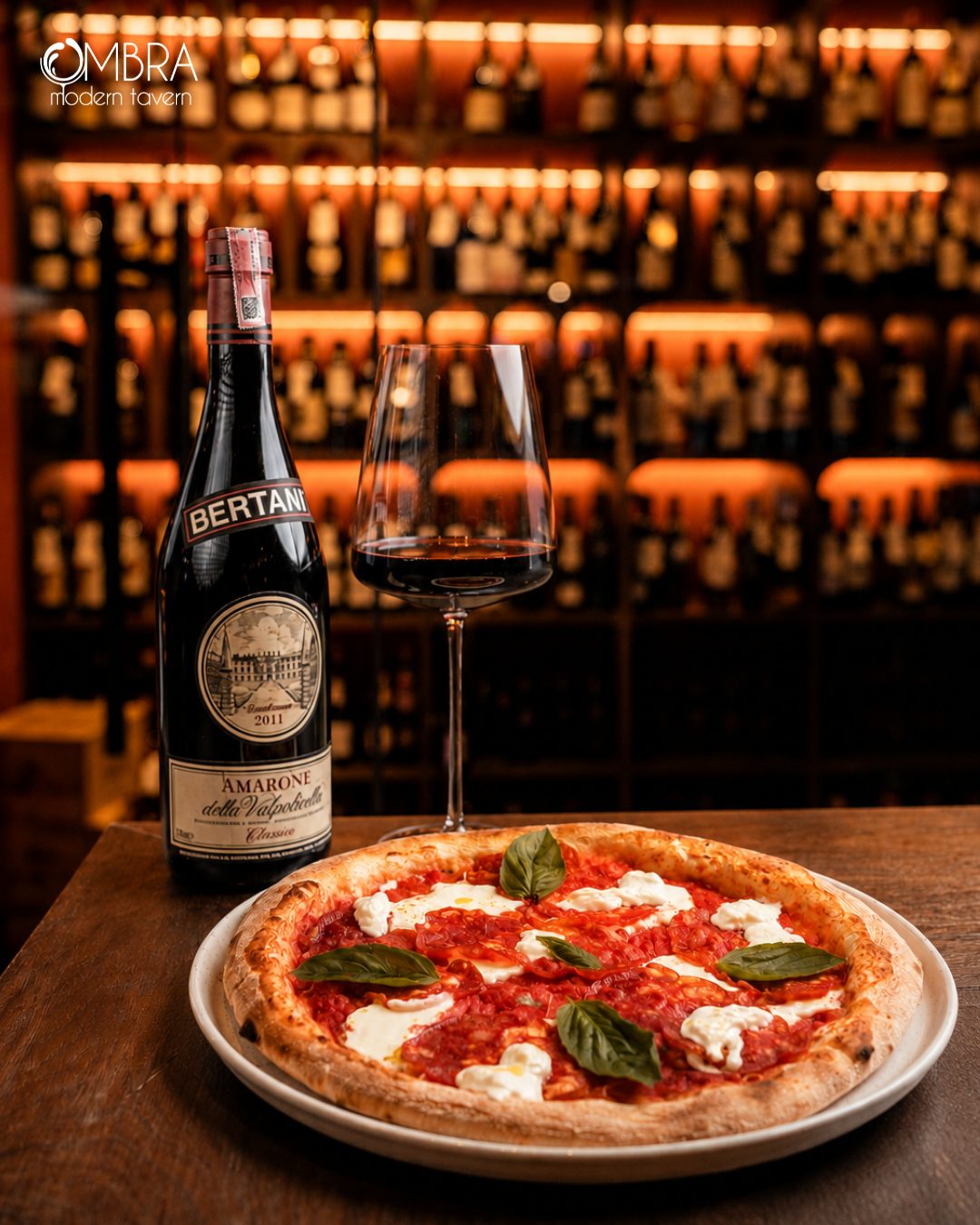
Pepperoni pizza is an Italian American pizza topped with pepperoni, a fine-grained, mildly spicy and slightly smoky cured sausage first recorded in New York in the 1910s. Italy has no salami called pepperoni. The closest Italian pizza is the Diavola, topped with the spicy salami of southern Italy. Ombra Modern Tavern, a Venetian inspired Italian restaurant and wine bar inside Seenspace on Thong Lor Soi 13, Bangkok, makes its Diavola with tomato, burrata, spicy Calabrian salami and fresh basil. This guide explains how the two pizzas differ, why asking for "peperoni" in Italy gets you peppers, and how to order a Diavola for the table in Thonglor.
Is a Diavola the same as a pepperoni pizza?
No, but the Diavola is the closest Italian relative of a pepperoni pizza. Both are tomato pizzas topped with a red, spicy cured salami. Pepperoni is an American sausage, while a Diavola uses a southern Italian salame piccante, usually coarser, hotter and not smoked.
Pepperoni is usually made from a mix of pork and beef, seasoned with paprika or other chilli, ground fine and cured until firm. It is soft, slightly smoky and bright red, and it is sliced thin. In a hot oven the thin slices often curl at the edges into small crisp cups as the fat renders.
Salame piccante, the spicy salami of Calabria, Apulia and the rest of the Italian south, is made from pork and dried red chilli, called peperoncino in Italian. The grind is coarser, the heat is stronger and the flavour leans on chilli and fennel or garlic rather than smoke. On a pizza it releases a red, chilli-tinted oil into the cheese.
"Diavola" means devil-style. Italian cooking uses "alla diavola" for dishes with real heat, and some Italian menus skip the nickname and list the same pizza as pizza al salame piccante, spicy salami pizza.
| Pepperoni pizza | Pizza Diavola | |
|---|---|---|
| Where it comes from | Italian American pizzerias, New York, early 1900s | Italy, especially the south |
| The salami | Pepperoni: pork and beef, fine grind, paprika, often lightly smoked | Salame piccante: pork, coarser grind, dried red chilli |
| Heat | Mild to medium | Medium to hot, depending on the salami |
| Cheese | Low-moisture mozzarella, usually generous | Mozzarella or fior di latte; at Ombra, burrata |
| Crust | Many styles: New York thin, pan, deep dish | Italian crust; at Ombra, a biga-style dough |
| What to look for | Small crisp cups on the slices | Red chilli oil running into the cheese |
Why does "peperoni" mean peppers in Italy?
In Italian, peperoni is the plural of peperone, bell pepper. A pizza ai peperoni in Italy is a pizza topped with roasted peppers, not salami. Pepperoni, spelled with two Ps, is an American word built on that Italian root for a sausage that Italian salumerie do not sell under that name.
Food writer John Mariani dates the first printed reference to pepperoni to 1919 in New York, when Italian butcher shops and pizzerias were spreading through the city. Other researchers have found the word used for a sausage from at least 1916. Why Italian American butchers named a spicy salami after bell peppers is still not known; the red colour is the usual guess.
The naming trap works in both directions. A traveller who orders a "pepperoni" pizza in Rome or Naples gets peppers, and an Italian who orders a pizza in the United States by its Italian name may never find a Diavola on the menu.
| If you want | Say this in the US or most of Asia | Say this in Italy |
|---|---|---|
| A spicy salami pizza | Pepperoni pizza | Pizza Diavola, or pizza al salame piccante |
| A bell pepper pizza | Pepper pizza | Pizza ai peperoni |
| Chilli | Chili, chili flakes | Peperoncino |
| Spreadable spicy salami | 'Nduja | 'Nduja, from Calabria |
Where does the spicy salami come from?
Calabria, the toe of the Italian boot, is the region most tied to spicy salami. Calabrian pork salumi are seasoned with local dried chilli, and four of them have been protected designations of origin (DOP) in the European Union since January 1998, under Regulation (EC) No 134/98.
The four Calabrian DOP salumi are Capocollo di Calabria, cured pork neck aged for at least 100 days; Pancetta di Calabria, cured pork belly; Soppressata di Calabria, a coarse-ground pork salami; and Salsiccia di Calabria, a cured pork sausage. 'Nduja, the soft, spreadable chilli salami that many people now associate with Calabria, is not one of them: it is a traditional product without DOP status.
Ombra's menu describes the topping simply as spicy Calabrian salami, without naming the producer or the type, so ask the team on the night if you want to know which salami is on the pizza.
How does Ombra make its Diavola in Thonglor?
Ombra Modern Tavern makes its Diavola with tomato, burrata, spicy Calabrian salami and fresh basil, on a biga-style dough. Burrata in place of plain mozzarella is the twist: the cream at the centre of a burrata cools the chilli between bites.
A biga is a pre-ferment. Part of the flour, water and a small amount of yeast are mixed and left to rest before the final dough is made, which builds flavour and gives a lighter, airier crust. Ombra's own site says its pizza dough is slow-proofed for 48 hours. A light, blistered crust matters on a spicy pizza, because the heat sits on the salami and the oil, not on a mouthful of dense bread.
A classic Diavola is built in a simple order: tomato spread by ladle onto hand-stretched dough, the salami laid on top, then a fast bake. In most Italian pizzerias, burrata goes on after the bake so the centre stays cool and creamy against the hot salami.
How should a table order a Diavola, and what should it drink?
Order the Diavola as one pizza for the middle of the table, next to a milder pizza or a pasta, so the heat has a contrast. With it, pour a chilled light red, a Lambrusco or a dry sparkling wine rather than a heavy, oaky red.
Rigatoni Carbonara, from Ombra's pasta list, is the natural partner: creamy, peppery and free of chilli. For a table of four, one Diavola, one milder pizza and one pasta to share is a fair start, and the table can order more once the first round is gone.
Chilli and alcohol amplify each other, so high-alcohol, tannic wines make a spicy pizza feel hotter. Lower-alcohol wines with fresh acidity and a little fruit calm it down. A wine bar in Thonglor that pours by the glass makes this easy, because each person can try a different glass against the same slice; the styles below are a guide, so ask what is open on the night.
| Wine style | Why it works with a Diavola | Example of the style |
|---|---|---|
| Chilled light red | Low tannin, red fruit, no extra burn | Valpolicella or Bardolino from the Veneto |
| Lambrusco | Gentle bubbles and fruit cool the chilli | A dry Lambrusco from Emilia |
| Dry sparkling wine | Bubbles and acidity cut the burrata and the oil | Prosecco or Franciacorta |
| Crisp white | Acidity resets the palate after the salami | Pinot Grigio or Soave |
Where to order a Diavola pizza in Thonglor
Ombra Modern Tavern serves its Diavola at 251/1 Thong Lo 13 Alley, inside Seenspace Thonglor, daily from 5 PM until late. Ombra is a wine bar in Bangkok first, pouring wine by the glass from a list with a strong Italian core and bottles from around the world, and an Italian restaurant in Thong Lor second, with classic pizza, pasta and small plates built around the wine. The room was designed by Unformaldesign with low warm lighting and Venetian influenced materials. Ombra holds the Italian Excellence in Thailand recognition from the Thai Italian Chamber of Commerce, and its Google Business Profile rating stood at 4.9 from 268 reviews as of August 2026.
The rest of the pizza list is on Ombra's food menu: tomato-based classics and white pizzas, made in a 12-inch size with a smaller 9-inch option. Call 064 790 7343 to book a table.
Frequently Asked Questions
What is the difference between pepperoni pizza and a Diavola? Pepperoni pizza is Italian American and uses pepperoni, a fine-grained, slightly smoky pork and beef sausage seasoned with paprika. A Diavola is the Italian spicy salami pizza and uses salame piccante, a coarser pork salami from southern Italy cured with dried chilli. The Diavola is usually hotter and less smoky than a pepperoni pizza.
Is pepperoni Italian? No. Pepperoni is an Italian American sausage. Food writer John Mariani dates the first printed reference to 1919 in New York, and other researchers have found the word from at least 1916. Italy has no salami called pepperoni. The closest Italian equivalents are the spicy salamis of Calabria and Apulia, used on a pizza Diavola.
What does peperoni mean in Italian? Peperoni is the plural of peperone, the Italian word for bell pepper. A pizza ai peperoni in Italy is topped with roasted peppers, not salami. Chilli is peperoncino in Italian. To get a spicy salami pizza in Italy, ask for a pizza Diavola or a pizza al salame piccante instead of a pepperoni pizza.
Is a Diavola pizza very spicy? A Diavola is medium to hot, depending on the salami. Southern Italian salame piccante is cured with dried red chilli, so it carries more heat than most American pepperoni. At Ombra Modern Tavern in Thonglor, the Diavola is topped with burrata, whose creamy centre softens the chilli. A chilled light red or sparkling wine also calms the heat.
Where can I get a Diavola pizza in Thonglor? Ombra Modern Tavern, an Italian restaurant and wine bar inside Seenspace on Thong Lor Soi 13, serves a Diavola with tomato, burrata, spicy Calabrian salami and fresh basil on a biga-style dough, with Italian wine by the glass. Ombra is open daily from 5 PM until late. Call 064 790 7343 to book a table.
The takeaway
Pepperoni pizza is an Italian American classic built on a sausage that Italy never had; the Diavola is the Italian original, built on the spicy salami of the south. At Ombra Modern Tavern, a wine bar in Bangkok and an Italian restaurant in Thong Lor, the Diavola comes with burrata, spicy Calabrian salami and basil, best shared next to a milder pizza and a chilled glass. Seenspace Thonglor, daily from 5 PM until late. Call 064 790 7343.
Plan your visit
Explore Italian restaurant in Thonglor or book a table at Ombra · private dining & events in Thonglor.
Keep reading
Italian aperitivo in Bangkok · Venetian-style happy hour wine · wine happy hour in Bangkok
Comments